
Have you ever sewn an elastic waistband, only to find that it twists inside the casing, rolls over when you're wearing it, stretch out as soon as you sew on it or simply doesn't feel as comfortable as you expected?
Perhaps you've picked up a roll of elastic at your local haberdashery, thinking elastic is elastic, right?
Well, not quite!
Just like fabrics, not all elastics are made the same. And while it might seem like a small detail in your sewing project, choosing the right elastic can make a big difference to the fit, comfort and overall finish of your garment.
There are quite a few different types available, each with its own characteristics and purpose. Some are stronger and more stable, others are soft and flexible, and some are designed specifically for swimwear, lingerie or decorative finishes.
So, let's have a closer look at the different types of elastic, how to recognise them and, most importantly, when to use them.
Why does choosing the right elastic matter?
When we think about sewing a garment, we often focus on choosing the right fabric, pattern and sewing techniques. But what about the smaller components, like elastic?
Elastic needs to do more than simply stretch.
It needs to recover, meaning it should return close to its original length after being stretched. It also needs to provide the right amount of support without being uncomfortable or distorting the fabric.
Think about a pair of trousers with an elastic waistband. If the elastic is too soft, it might not provide enough support. If it's too firm, it could feel uncomfortable. And if you've used the wrong construction, you might find yourself constantly adjusting a twisted waistband.
Understanding a little more about elastic can help you avoid these frustrations and make more informed choices when planning your next sewing project.
The three main types of elastic
Let's start with the basics.
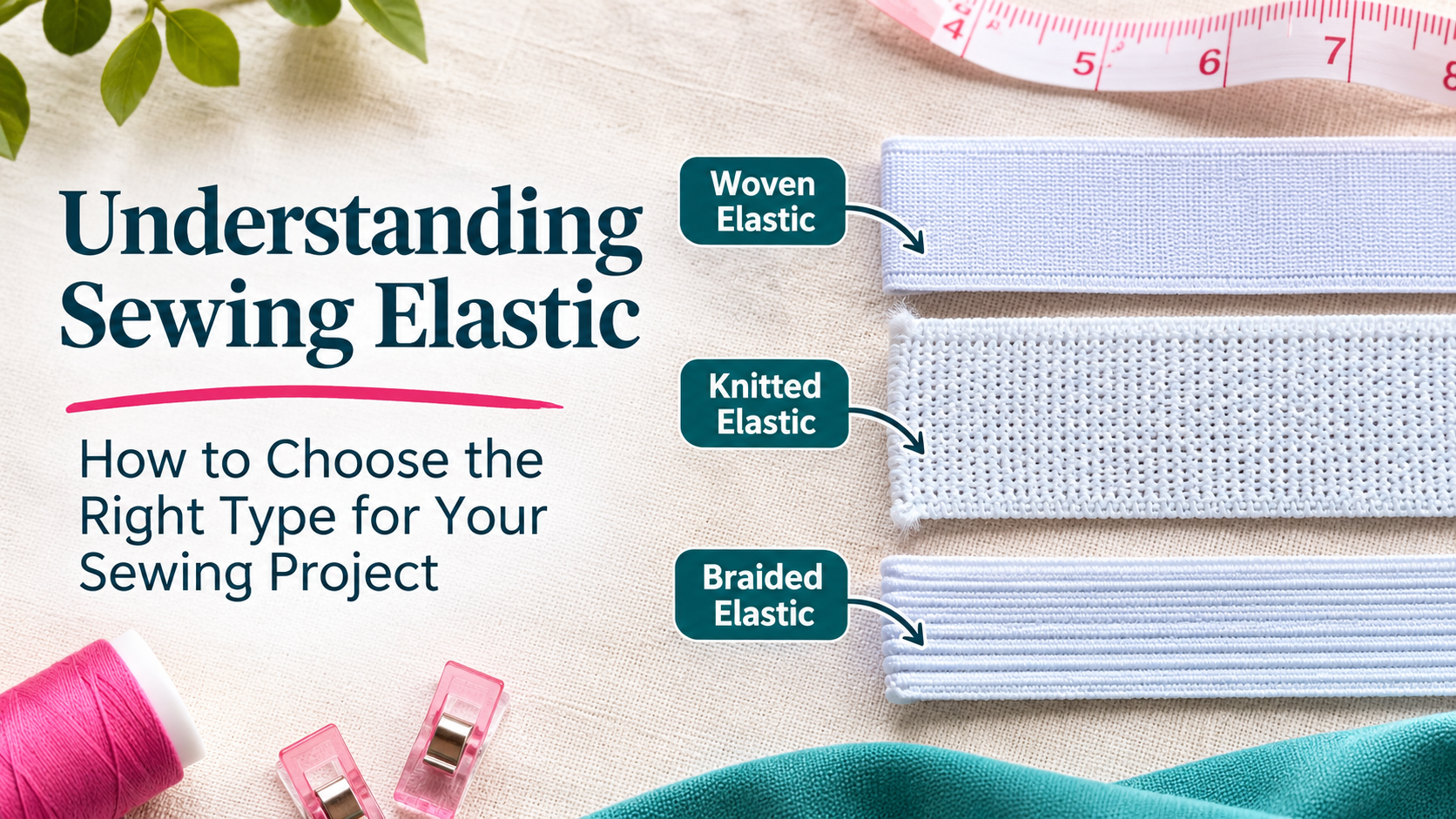
There are three main construction types you'll commonly come across in garment sewing: woven, knitted and braided elastic.
The difference lies in how they're manufactured, which affects their stability, stretch and how they behave when sewn.
1. Woven elastic: Firm, strong and stable
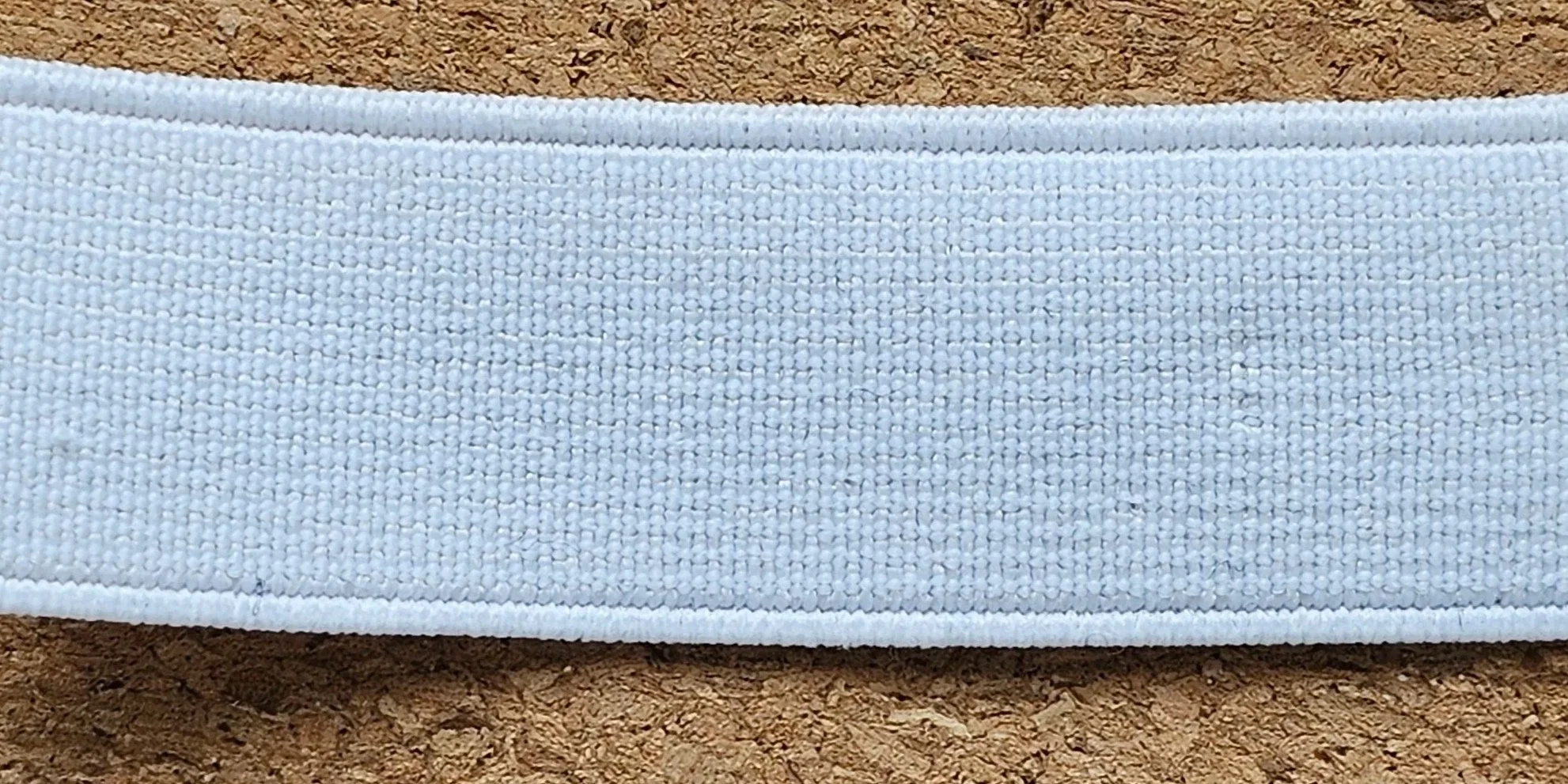
Woven elastic is one of the strongest and most stable general-purpose elastics available.
It is manufactured by weaving yarns together with elastic fibres, creating a firm structure that holds its width when stretched.
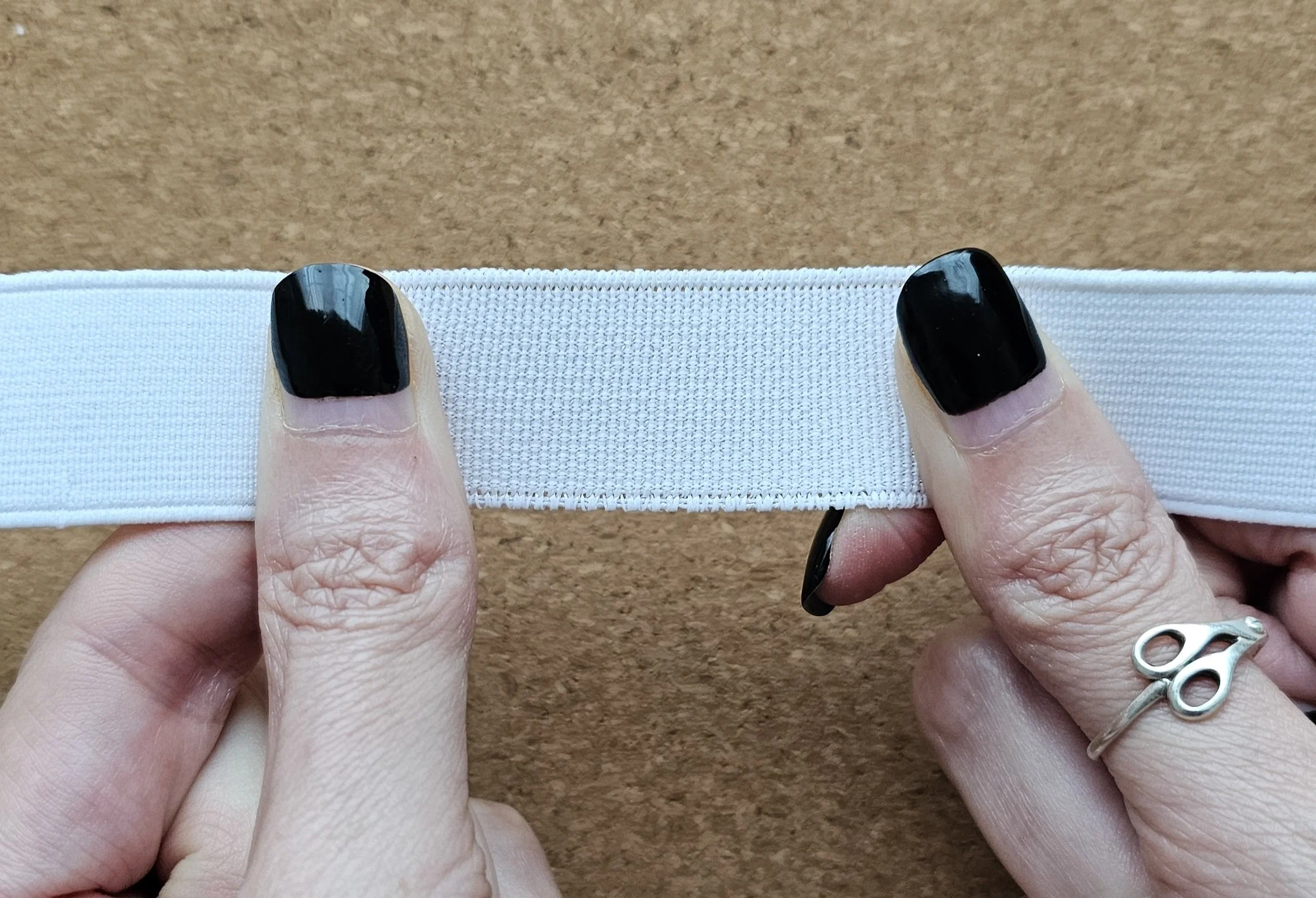
One of the things I particularly like about woven elastic is its stability. It doesn't become narrower when pulled, and it can be stitched directly onto fabric without significantly affecting its stretch.
This makes it an excellent choice for waistbands, especially when working with heavier fabrics or garments that need a little more support.
Where would you use it?
Think trousers, skirts, structured waistbands and heavier garments.
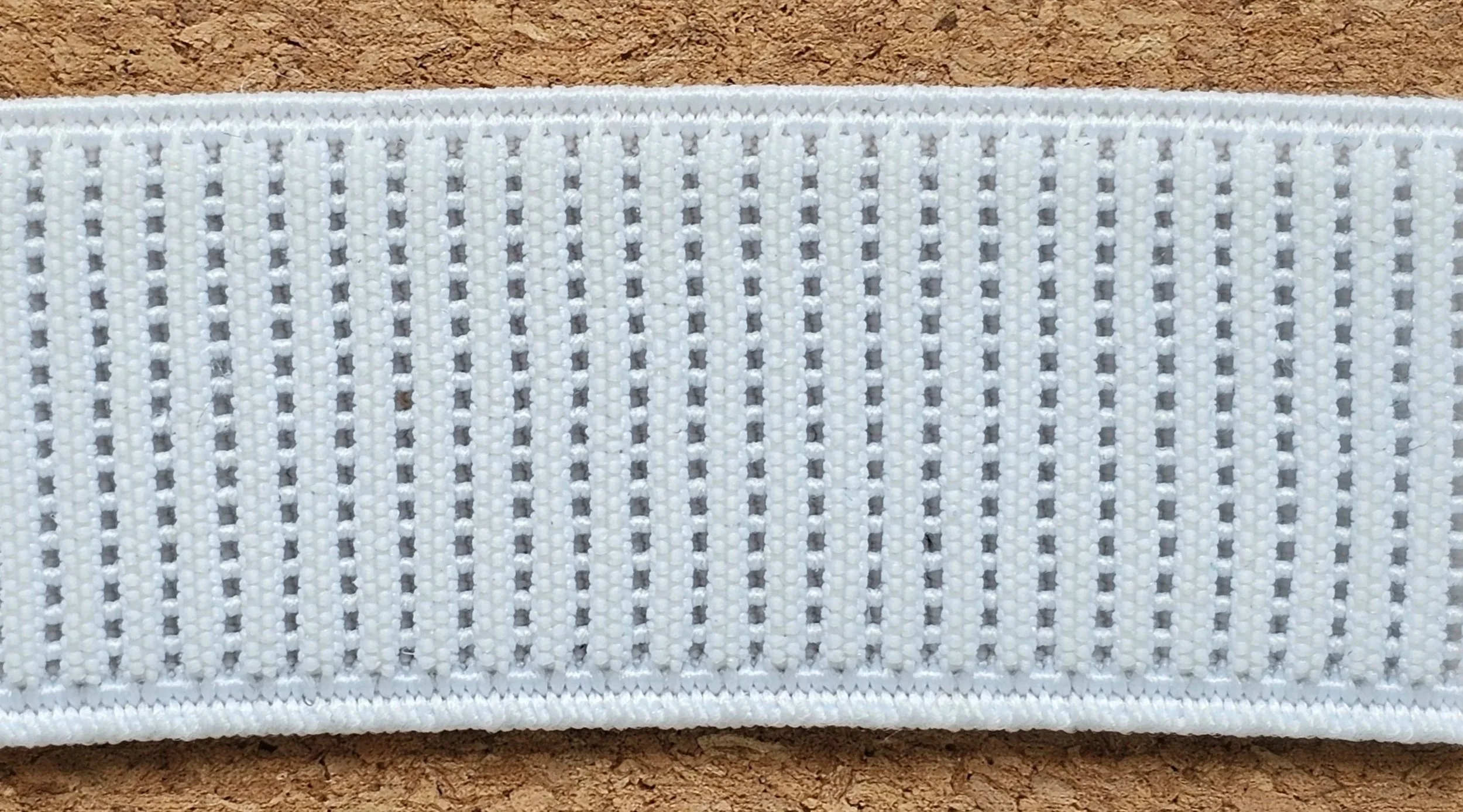
You may also come across ribbed or non-roll elastic. Some of these are woven elastics designed with additional structure to help prevent the waistband from folding or rolling during wear.
The downside? Woven elastic can be quite firm, so it might not be your first choice for a lightweight, delicate garment where comfort and softness are more important.
2. Knitted elastic: Soft and flexible
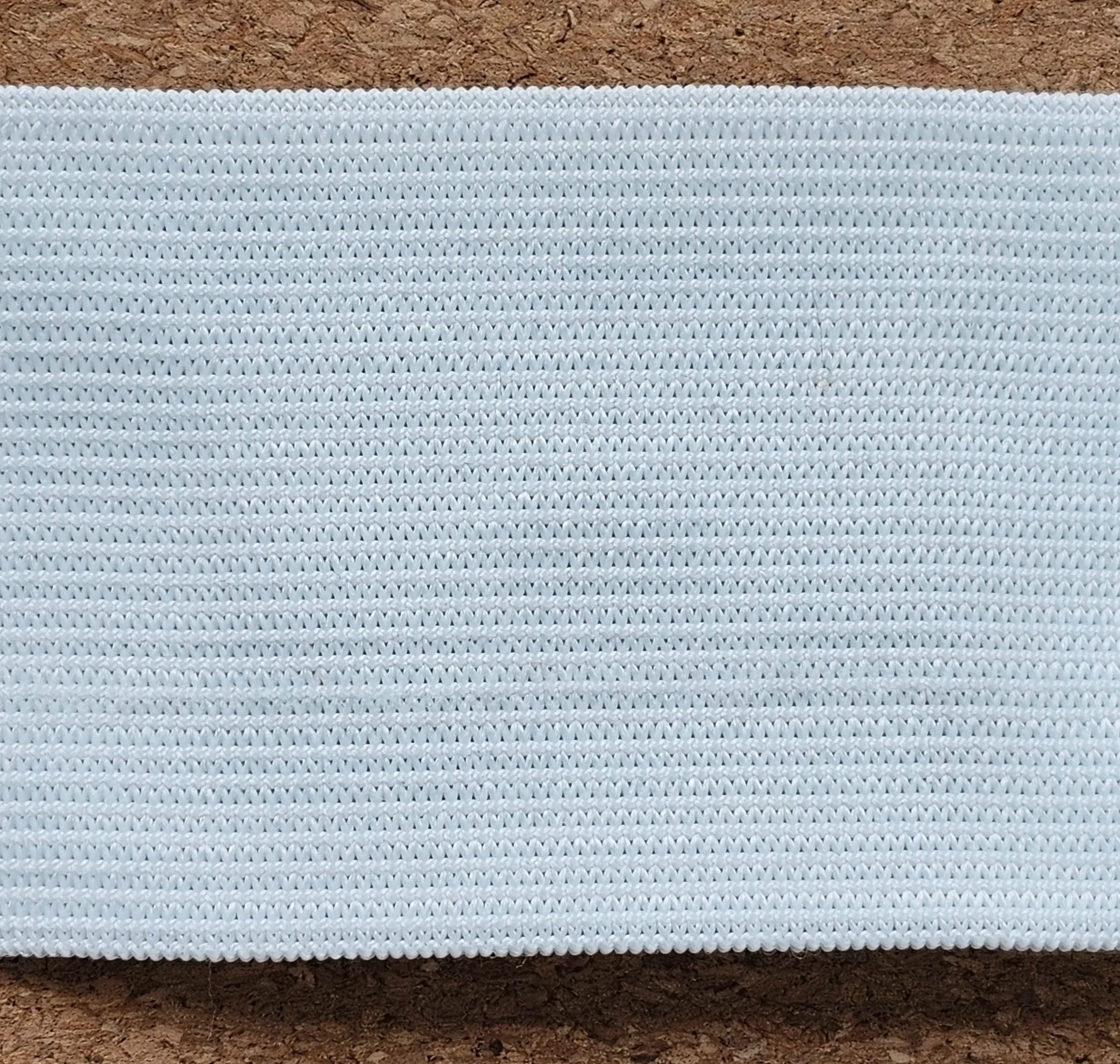
Knitted elastic is made using a knitted construction, which gives it a softer, more flexible feel.
Like woven elastic, it generally maintains its width when stretched and can be stitched directly onto fabric.
However, it tends to be softer and more comfortable against the body.
This makes it a lovely option for everyday garments, lightweight waistbands, children's clothing and garments where you want a little more flexibility.
Where would you use it?
Think comfortable shorts, skirts, dresses, children's clothing and some activewear.
One thing to keep in mind is that knitted elastic may not provide the same firm support as woven elastic, especially when working with heavier fabrics.
3. Braided elastic: The one that narrows!
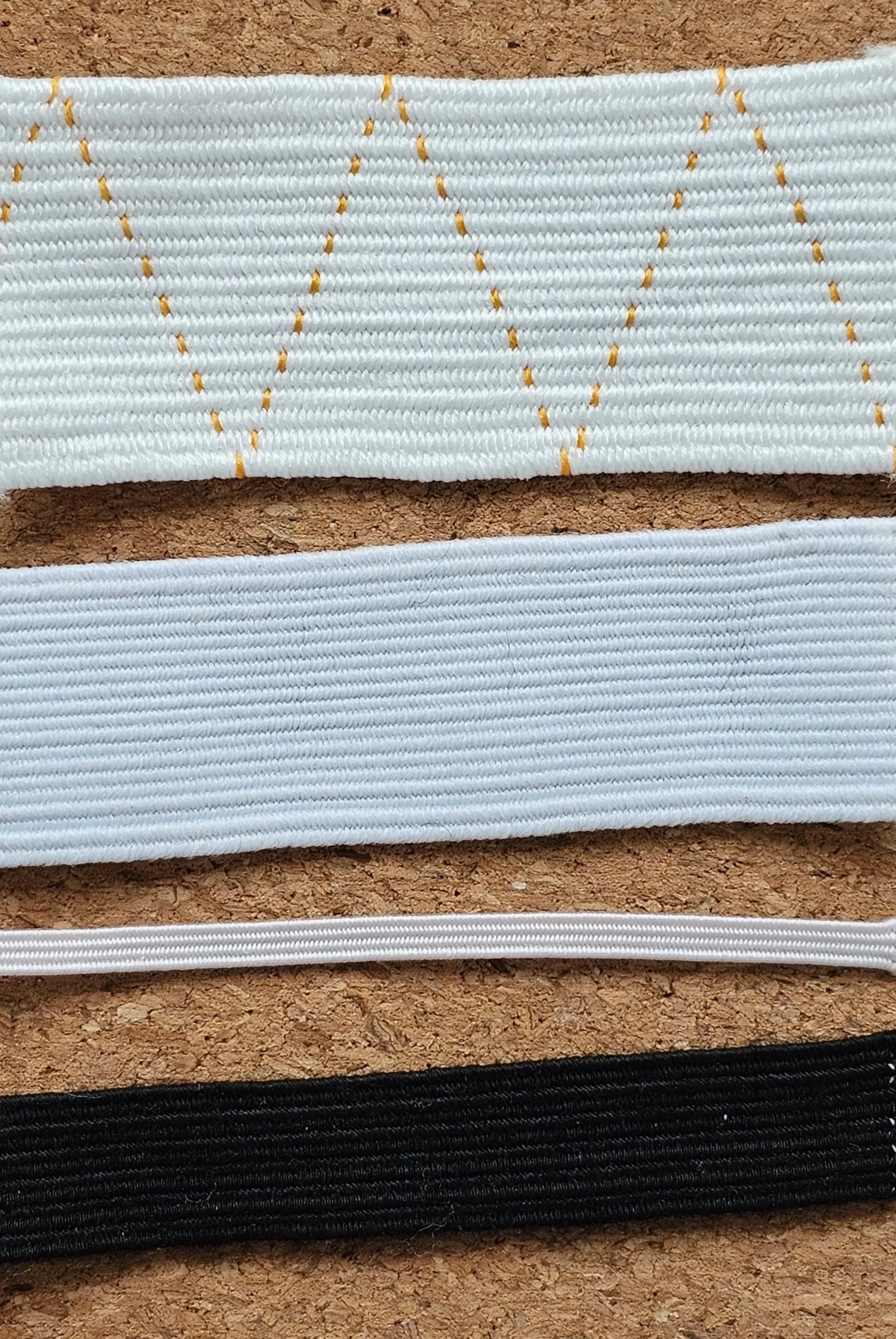
Now, this is an interesting one.
Braided elastic is probably one of the more familiar elastics you'll find in a sewing shop. It is the most readily available too. It has a slightly textured surface, created by interlacing yarns around elastic strands.
Braided elastic works well inside casings, particularly narrower ones, but it isn't generally recommended for stitching directly through along its length. Doing so can restrict its stretch and affect how it performs, basically stretch it out.
It can also twist or roll inside a casing, something you may have experienced with elastic waistbands.
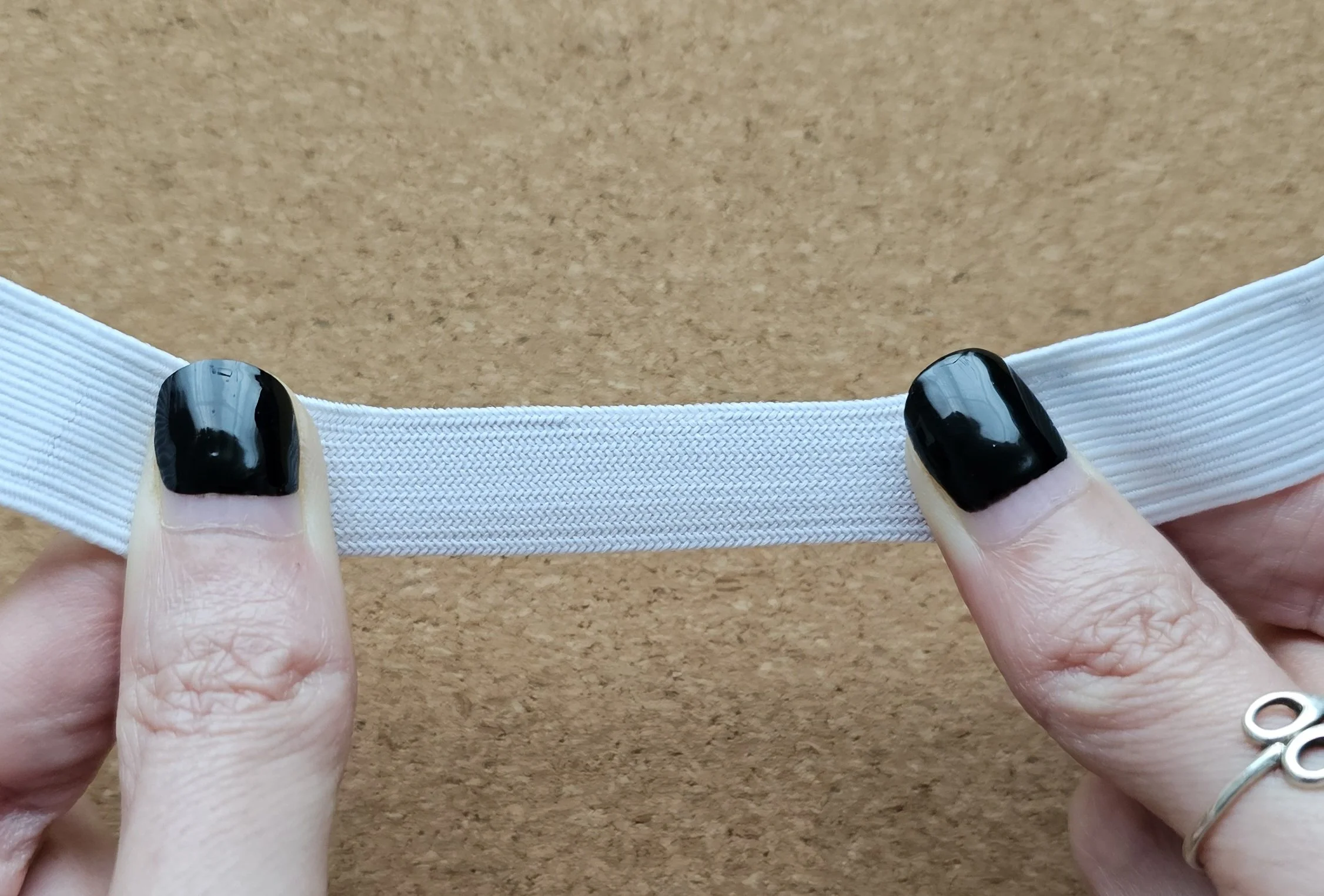
But here's something to try next time you have a piece in your hands. Stretch it and watch what happens to the width.
Unlike woven and knitted elastic, braided elastic becomes narrower when stretched.
This is one of the easiest ways to recognise it.
Where would you use it?
Think sleeve cuffs, narrow casings and smaller gathered areas.
It's useful, but perhaps not the best choice for every waistband!
What about all the other elastics?
Once you start exploring, you'll notice there's much more available than the three basic types.
Many speciality elastics are variations of woven or knitted elastic, designed with a particular finish or function.
Here are some you may have come across.
Plush-back or soft-touch elastic
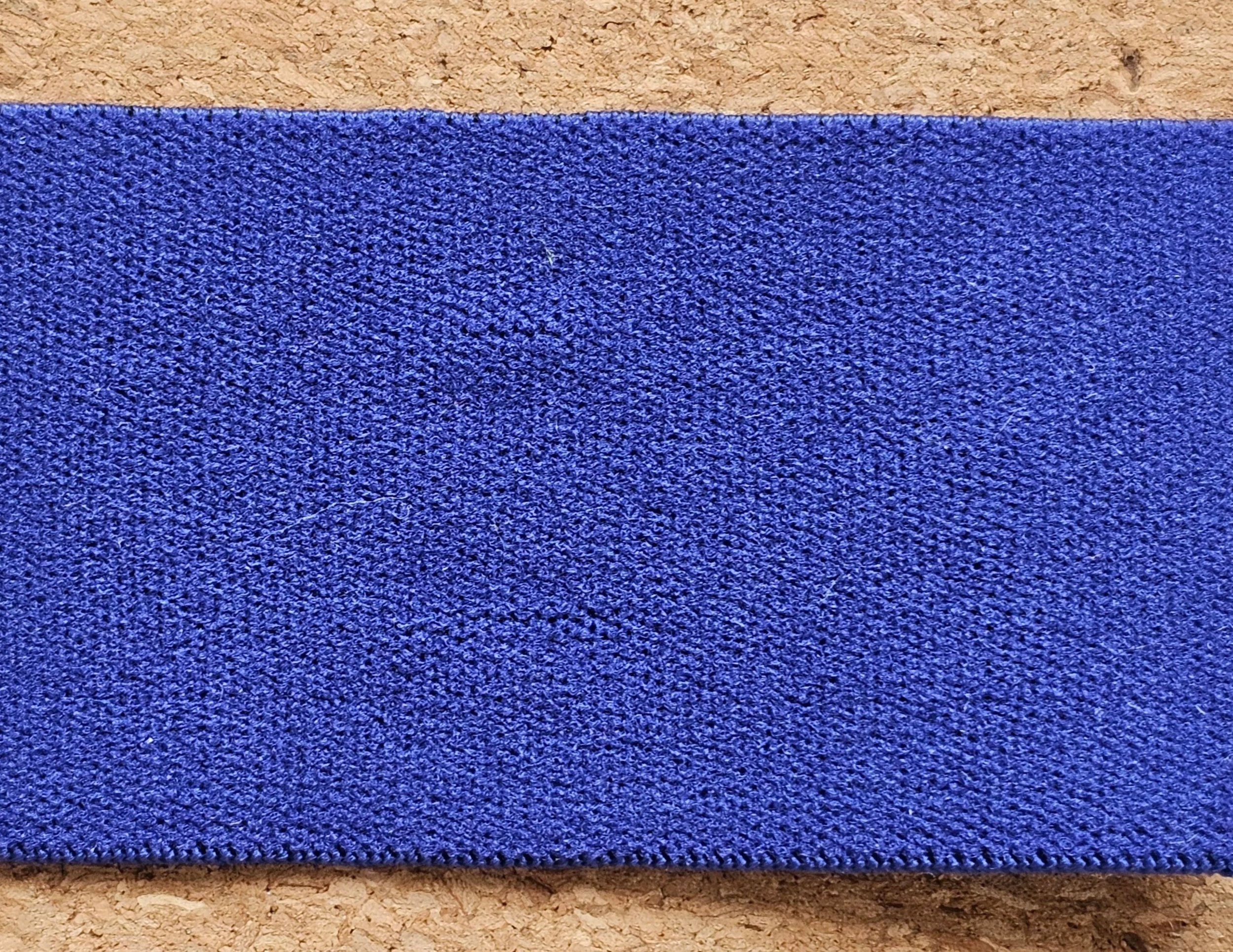
This elastic has a soft, brushed surface on one side, making it comfortable against the skin.
It's particularly useful for lingerie, underwear and visible waistbands where you want both comfort and a neat finish.
Some are available in beautiful colours, making them an interesting design feature rather than something you need to hide inside the garment.
Jacquard elastic
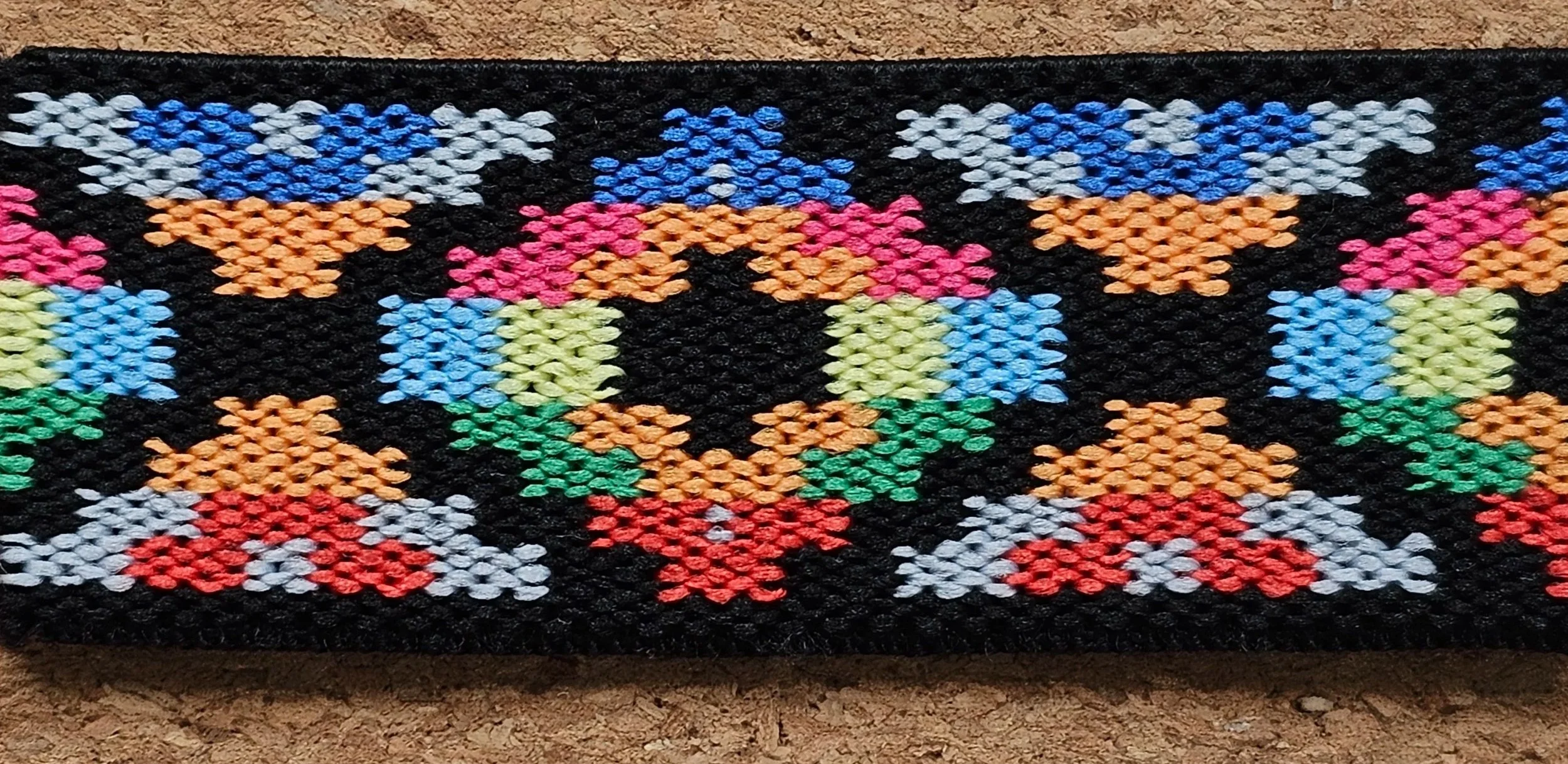
You've probably seen this on underwear or sportswear waistbands.
Jacquard elastic has decorative patterns, designs or lettering incorporated into the elastic during manufacture.
It's both functional and decorative, making it a lovely choice for an exposed waistband.
Picot and decorative lingerie elastic
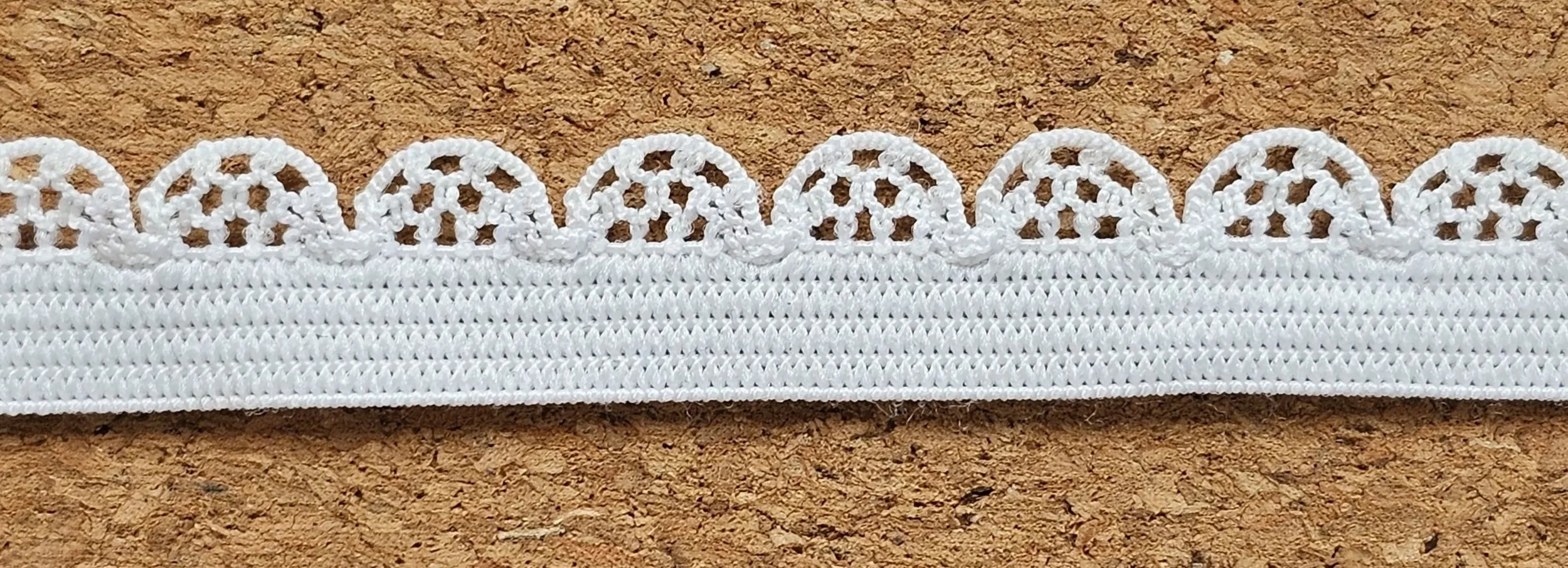
Picot elastic has small decorative loops or scalloped edges and is commonly used in lingerie and underwear.
You may also find crochet-style elastics with more textured or open decorative details.
These are useful when you want to finish an edge while adding a little detail to the garment.
Buttonhole elastic
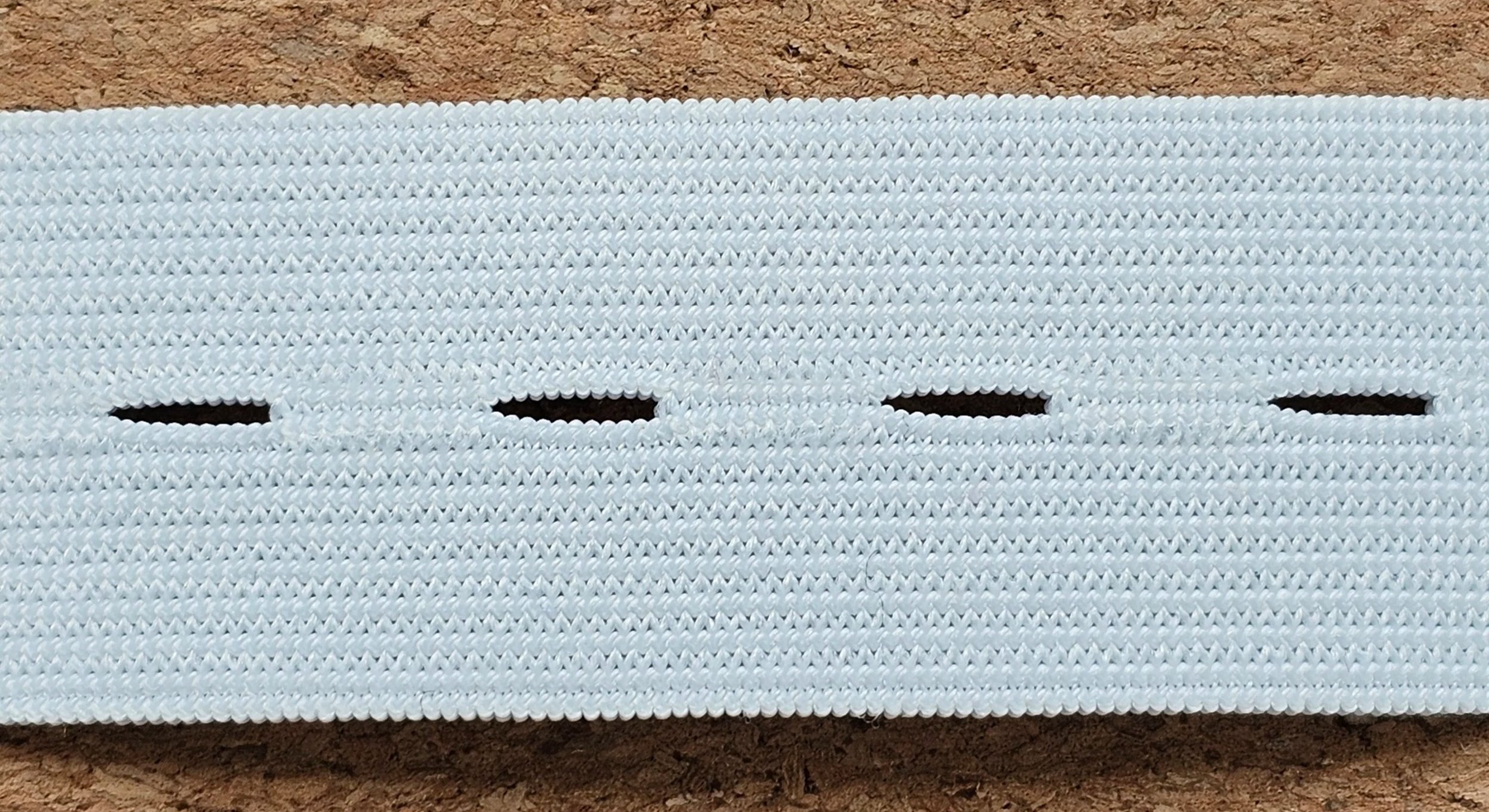
This is a clever one, particularly for children's clothing.
Buttonhole elastic has a series of openings along its length, allowing you to adjust the waistband using a button.
As a child grows, you can simply adjust the elastic rather than having to replace the entire waistband.
It can also be useful in maternity clothing or other adjustable garments.
Silicone-backed elastic
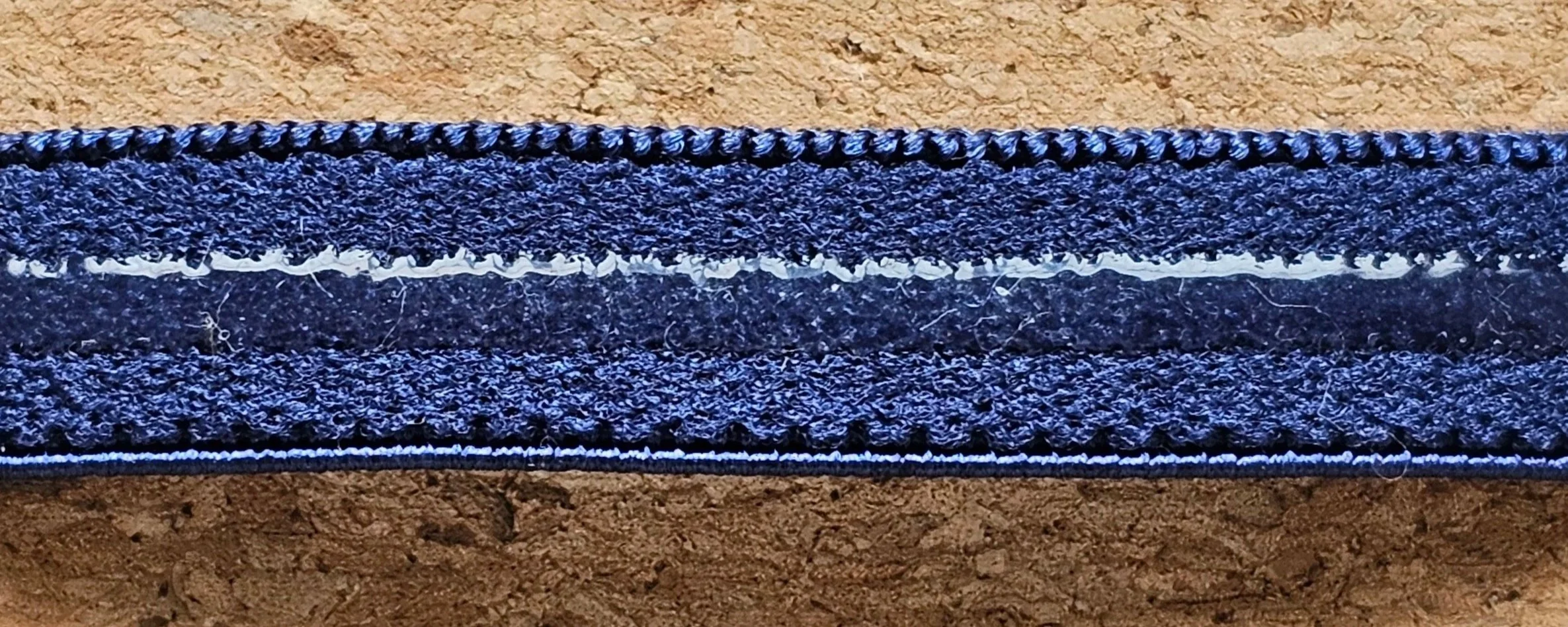
Ever wondered how some strapless garments stay in place?
One option is silicone-backed elastic.
It has silicone strips or dots on one side, creating a gentle grip against the skin or fabric to help prevent slipping.
You'll find it used in strapless garments, off-the-shoulder designs and certain types of sportswear.
Swimwear elastic
Swimwear requires a little more consideration because the elastic is exposed to water, chlorine, salt and often sunscreen or body oils.
Swimwear elastic is specifically manufactured for these conditions and is commonly made using rubber-based materials.
Ordinary garment elastic may deteriorate more quickly under these conditions, so it's important to choose one specifically suitable for swimwear.
Clear elastic
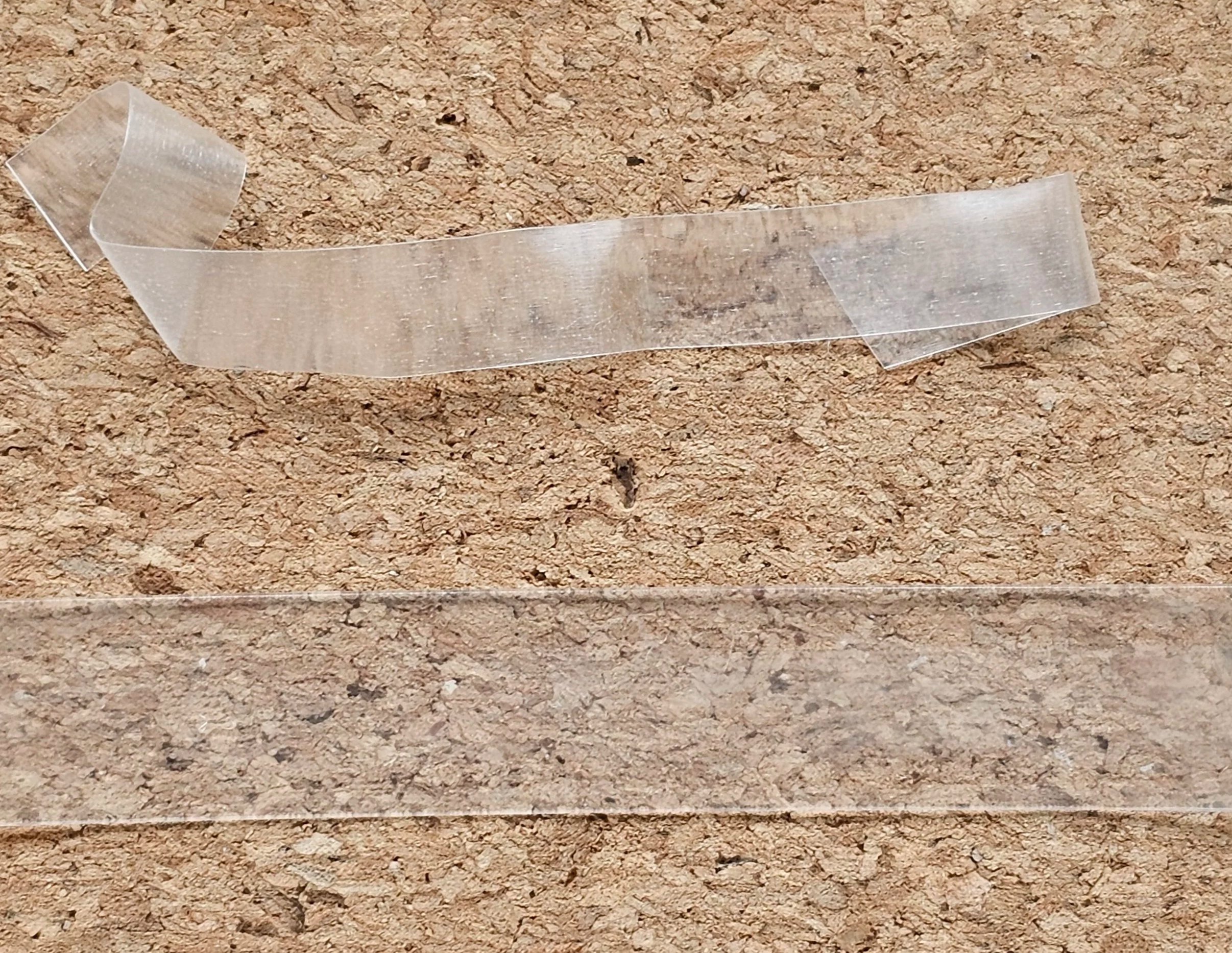
Clear elastic is usually made from transparent polyurethane and is particularly useful when you need support without adding much bulk.
One common application is stabilising shoulder seams in knit garments to help prevent them from stretching out.
It can also be used for gathering and other lightweight stabilising applications.
Just remember that clear elastic can deteriorate over time, especially when exposed to excessive heat or poor storage conditions.
Fold-over elastic
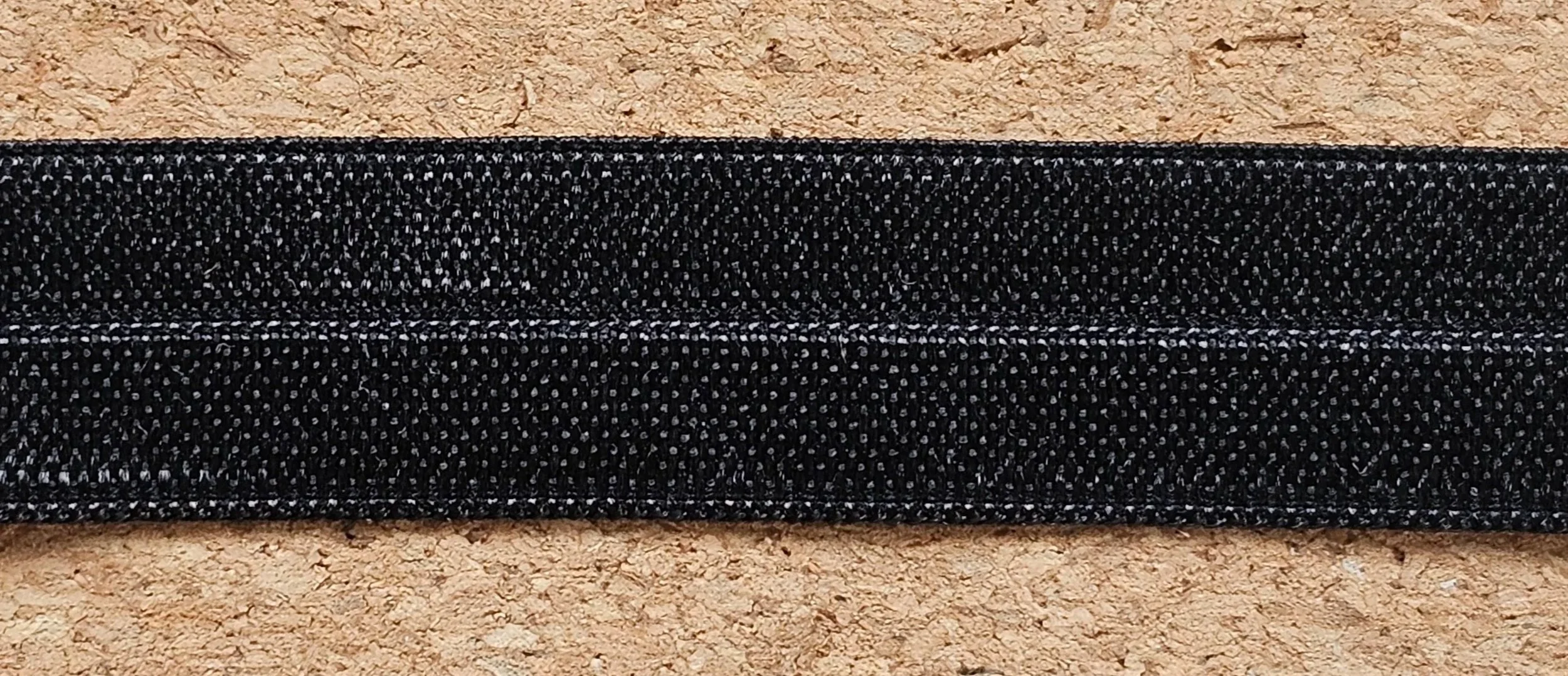
Fold-over elastic, often called FOE, has a crease along the centre that allows it to fold neatly over a fabric edge.
Think of it as a stretchy alternative to bias binding.
It's useful for finishing edges on lingerie, babywear and knit garments, providing both stretch and a decorative finish.
It can take a little practice to apply evenly, but it's a lovely technique to have in your sewing skills collection.
How do you know which elastic to choose?
Before buying elastic for your next project, there are a few things worth considering.
1. What is the purpose of the elastic?
Is it supporting a waistband, gathering a sleeve, finishing an edge or preventing a garment from slipping?
Different applications require different levels of support and flexibility.
2. How will you attach it?
Will the elastic sit inside a casing, or will you stitch directly through it?
This is particularly important when deciding between braided, knitted and woven elastic.
3. What fabric are you using?
Consider the weight and stretch of your fabric.
A lightweight cotton skirt and a pair of heavier linen trousers might both have elastic waistbands, but they won't necessarily need the same elastic.
4. How does it feel when stretched?
This is something I always encourage sewists to explore.
Pick up different elastics and stretch them.
Notice how much resistance you feel. Does the elastic return to its original length? Does it become narrower? Is it soft or firm?
These little observations will help you understand how an elastic might behave in your finished garment.
A few things to remember when sewing with elastic
Before cutting and inserting your elastic, here are a few practical tips.
Test the stretch and recovery. Stretch the elastic several times and see how well it returns to its original length.
Don't assume all elastics behave the same. Even two elastics of the same width can have very different stretch and firmness.
Check whether it can be stitched through. Woven and knitted elastics are generally suitable, while braided elastic is better used inside a casing.
Consider the casing width. A casing that is too narrow can cause the elastic to bunch or restrict movement. A very loose casing can also allow twisting.
Test the fit before securing everything. The correct elastic length depends on its stretch, firmness and the garment design, not simply your waist measurement.
And don't forget, if you're following a sewing pattern, check whether a particular type or width of elastic has been recommended.
Try this with your own elastic collection
If you have a few different elastics in your sewing stash, why not take a little time to compare them?
Find a piece of woven, knitted and braided elastic.
Stretch each one and observe what happens.
Which one feels firmer? Which one stretches more easily? Which one becomes narrower?
You could even stitch a small sample of woven and knitted elastic onto fabric to see how they behave.
It's a simple exercise, but one that can help you better understand the materials you're working with.
And the next time you're shopping for elastic, you'll have a much clearer idea of what to look for.
Final thoughts
Elastic might seem like a small part of sewing, but understanding how different types are constructed and how they behave can make a real difference to your finished projects.
It's not always about choosing the strongest elastic or the one with the most stretch. It's about choosing the one that's right for your fabric, garment and intended use.
And that's something I often remind sewists of. Improving your sewing isn't only about learning more complicated techniques. It's also about understanding the materials, tools and smaller details that contribute to a well-made garment.
Want to explore this a little further?
Inside my SEWsimple™ Online Studio, I've created a downloadable Understanding Elastics in Your Sewing reference guide covering the different types, their characteristics, advantages, disadvantages and best uses.
You can even add your own elastic samples to build a personalised reference collection to return to whenever you're planning a project.
It's just one of the many practical resources available to help you build your skills, make progress and create sewing projects you're proud of.
I'd love to know: Have you ever had an elastic waistband twist, roll or lose its stretch? And did you know there were so many different types of elastic?
Share your experience in the comments below.
Happy sewing!
Arzelle
Sew on & Sow Forth™