
Over the past few months, I've found myself having quite a few conversations about alterations with seamstresses and inside SEWsimple™ community. It's one of those topics that seems simple on the surface, but the more you talk about it, the more layers there are to uncover. If you're a sewist, you've probably experienced it too. Someone discovers that you sew and not long after they ask, "Can you alter this for me?"
Now, technically, yes. Most sewists can alter clothing. But that doesn't necessarily mean they want to. In fact, many sewists would happily make a garment from scratch before volunteering to replace a zip. I know that is me. And if you've ever replaced a zip, you'll probably understand exactly why. (I would probably still replace it if its mine or fam, it is not my favourite to do, but I am passionate about sustainability)
The hidden work behind clothing alterations
One of the biggest misconceptions about clothing alterations is that they're quick and easy. After all, the garment already exists, right? Surely you're just adjusting a seam or shortening a hem. It should be quick?
The reality is often very different. Before an alteration can even begin, someone needs to assess the garment and figure out what is actually causing the problem.
Is it the fit?
Is it the construction?
Is it the fabric?
Is the alteration even possible?
How will it be altered, taken out, parts added in?
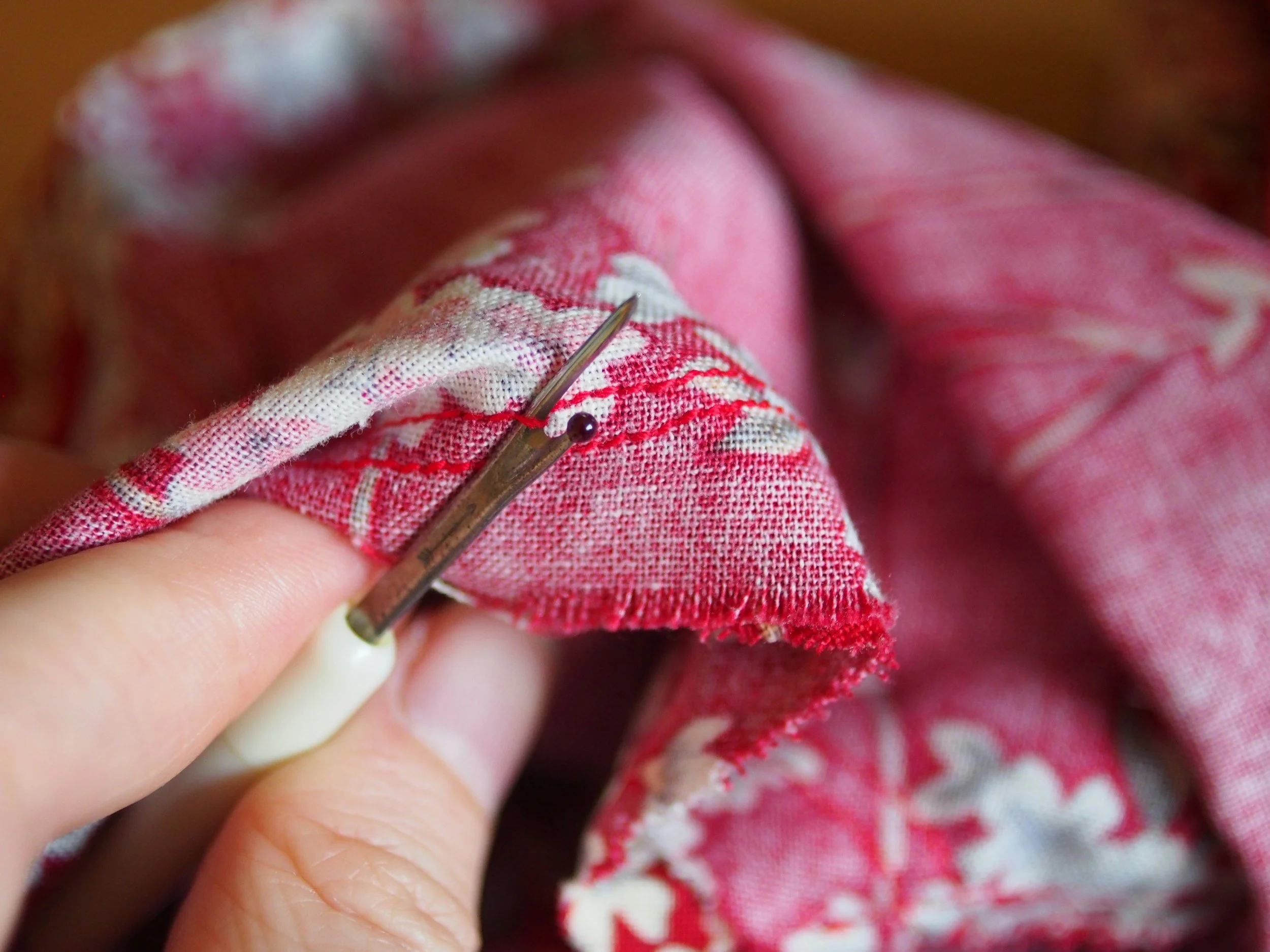
Then comes the unpicking. And as any sewist knows, that's where things can get interesting or frustrating right, you either love it or not. Sometimes you're working with a simple side seam. Other times you're dealing with linings, French seams, multiple layers, or construction methods you've never come across before.
Fast fashion garments can add another layer of complexity, as they're often designed for efficient or low cost production rather than future alterations. You might come across chain stitching, thin overlocked seams, coverstitch hems, safety stitched seam or very narrow seam allowances that leave little room for adjustment.
What many people don't realise is that garment alterations often involve doing the work twice. First, carefully taking the garment apart. Then reconstructing it again so it looks neat, professional, and hopefully as though it was always intended to fit that way.
Sometimes altering clothes can take longer than sewing that section from scratch.
Domestic sewing versus a production line
I think part of the misunderstanding comes from how disconnected many of us have become from how clothing is actually made.
When garments are produced in a factory, they move through a production line ( an assembly line or different systems such as MPS, PBS, UPS). One person might spend their entire day attaching collars. Another inserts sleeves. Another attaches waistbands. One specialised sewing station.
Each person focuses on one specialised task.
When you're carrying out clothing alterations, you're the entire production line.
You're the one assessing the issue.
You're the one unpicking.
You're the one making the adjustment.
You're the one pressing, fitting, re-sewing, troubleshooting, and finishing.
It's a completely different process.
Having spent years in fashion education and industry, I've seen both sides. I've watched garments move through production systems, and I've also sat at a sewing machine carefully working through a single alteration that looked simple but turned out to be anything but.
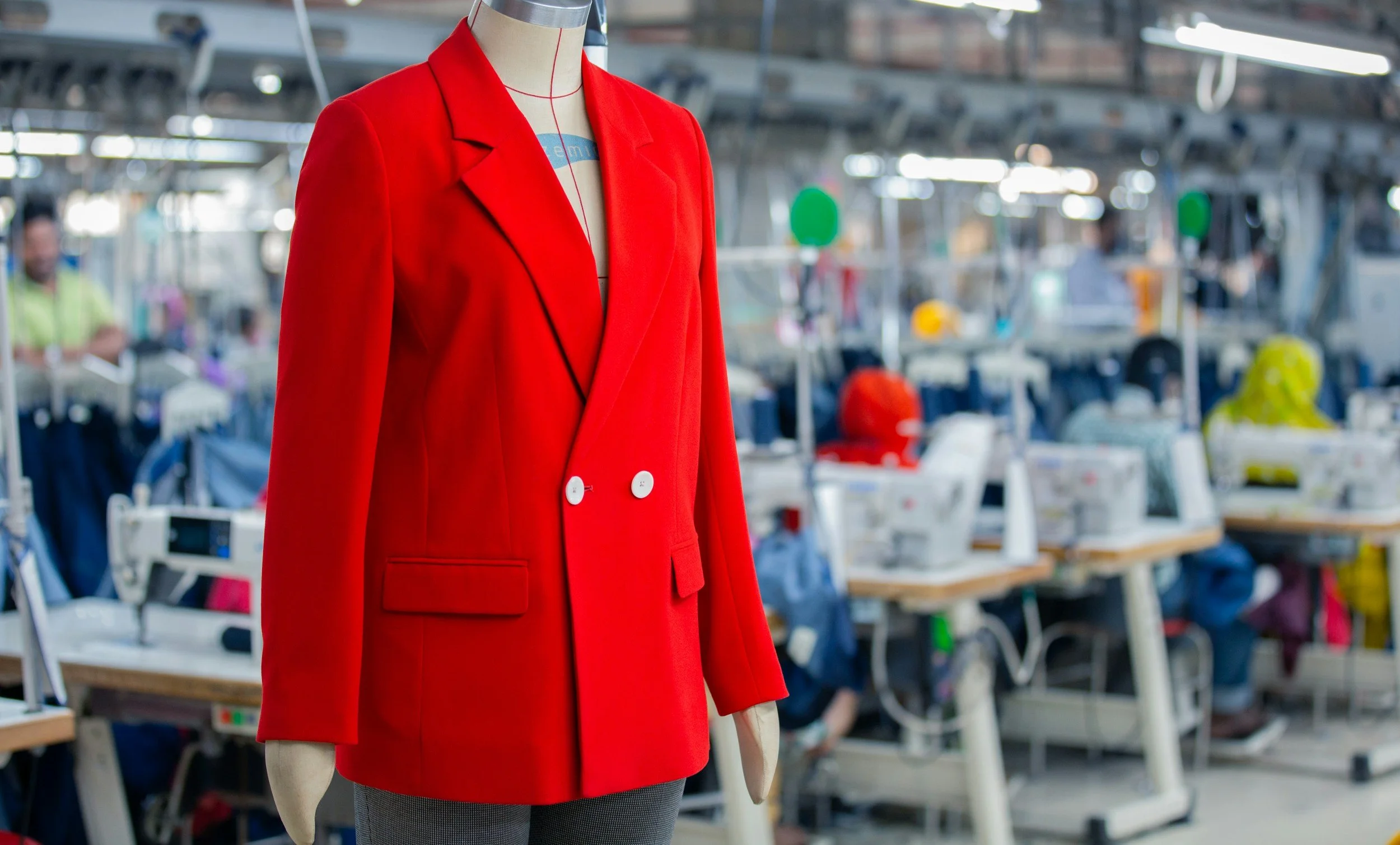
One garment may pass through the hands of a few to be made.
Why clothing alteration costs can feel surprising
Another conversation that often comes up is cost. Many people are surprised by the price of clothing alterations. And to some point I understand why.
If someone has purchased a garment at a relatively low price point and then discovers that the alteration costs a significant percentage of the original garment, it can feel unexpected.
But the price isn't really connected to what the garment originally cost. It's connected to the time, skill, and experience needed to alter it. Whether a pair of jeans cost $30 or $300, shortening the hem still requires the same steps. A zip still needs to be removed and replaced. A waistband still needs to be opened, adjusted, and reconstructed.
The garment's price tag doesn't reduce the amount of work and skill involved to alter.
Fast fashion has changed the conversation
I think fast fashion has shifted our expectations around clothing. Today, clothing is more accessible than ever before. You can scroll, click, purchase, and have a garment arrive at your door within days. In some cases, within hours, at a fraction of the cost it was 20 years ago.
We're living in a world where clothing is often sadly treated as highly disposable (that is a whole other topic I can get into for hours). When a replacement is only a click away, it's understandable that fewer people think about repairing, refashioning, or altering what they already own. Consumer habits has changed, and I don’t believe for the better, but towards convenience, over consumption (driven by big brand profit). (Again another topic I can talk hours about).
But there is another side to that story.
Many modern (fast fashion) garments aren't designed with future alterations in mind. I've noticed over the years that seam allowances are often much smaller than they used to be. Sometimes there simply isn't enough fabric hidden inside a seam to let a garment out. The seams are often overlocked quickly, with very little room for adjustment. So it entails a whole different approach then.
Compare that to many handmade garments. When I sew, I still generally use 1.5cm seam allowances. Not because I plan to alter every garment in the future, but because I know bodies change. Preferences change. Life changes.
Having that little bit of extra room can make future garment alterations much easier.
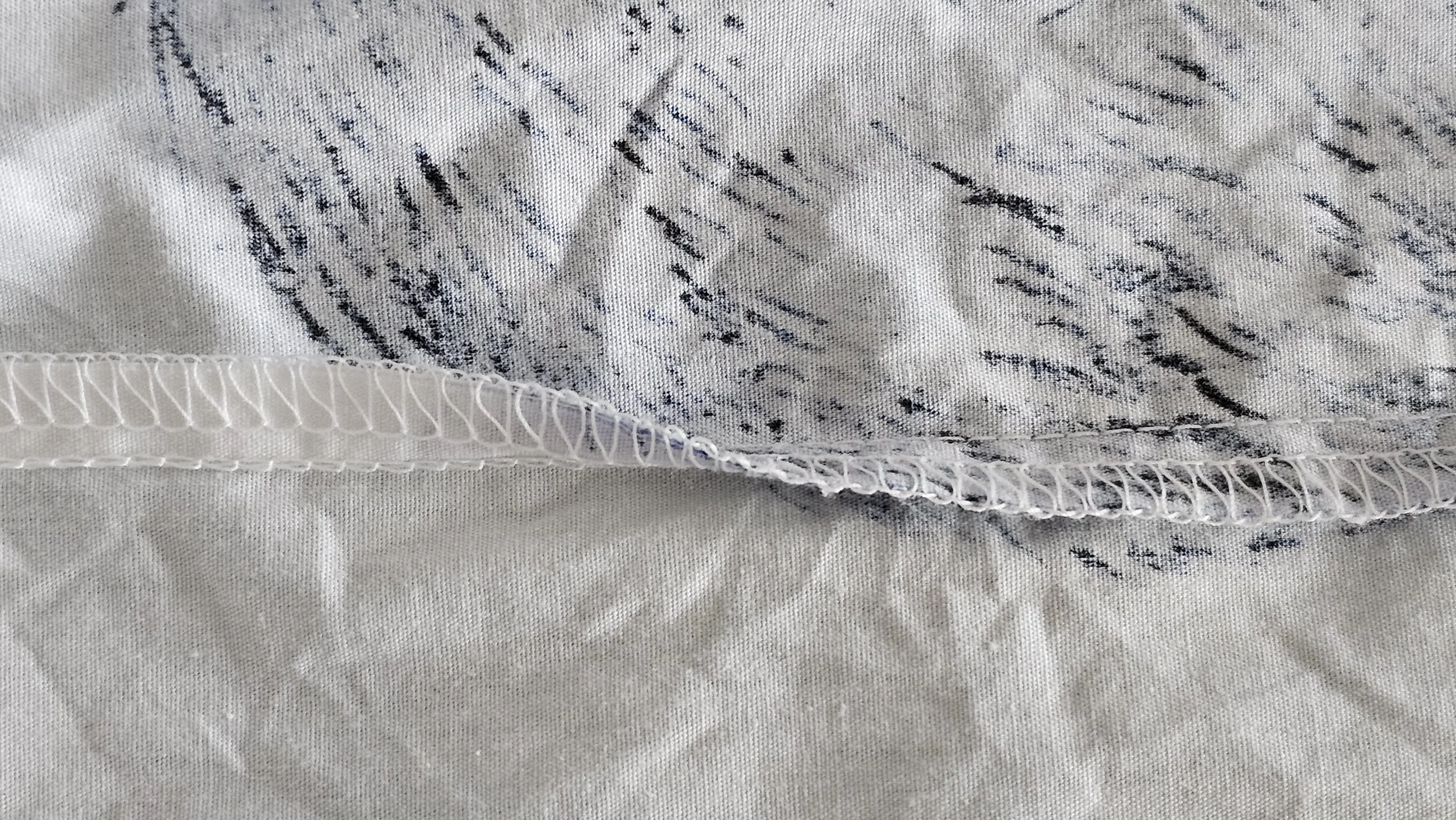
A safety stitch - chain stitch with overlocked edge
Would I personally do alterations?
The honest answer?
Yes, but I'm selective.
As a fashion designer and sewist, I absolutely can alter garments. I do it for myself, and sometimes for family and close friends. But over the years I've realised that while I appreciate the skill involved in alterations, it's not the part of sewing that brings me the most joy.
What I enjoy is the creative side of sewing. Designing, problem-solving, and refashioning a garment into something new.
I'm more likely to recommend a seamstress who specialises in alterations than do it myself. There are people who genuinely love that work and have built incredible expertise around it.
One thing I wish I'd learnt earlier in my sewing journey is that it's okay to be selective. Not every sewing skill needs to become a service. Not every request needs to become a project. And to value my skill, even if it is ‘just’ altering.
Sometimes the most professional answer is simply, "Sorry, that's not something I offer."
And that's perfectly okay.
The rewarding side of altering clothes
For all the challenges, there is something incredibly satisfying about giving a garment a second chance.
Earlier this year, I went through my own wardrobe and found a few garments I'd made that had barely been worn. They weren't bad garments. They just weren't quite right anymore. Rather than letting them sit in the cupboard, I spent some time making adjustments. A small alteration here. A tweak there.
That experience is just a reminder that clothing doesn't always need replacing. Sometimes it simply needs adapting.
Refashioning, alterations, and making things work for you
This month inside SEWsimple™, we explored refashioning and simple garment alterations.
One of the techniques we focused on was adjusting the waistband of jeans. It's a common issue. The jeans fit through the hips and legs but gape at the back waist. Or perhaps they're just a little too snug around the waist but fit perfectly everywhere else.
Rather than immediately replacing the garment (which in my case would not help, as my waist is two sizes smaller than my hips, not going to find that in a store), we looked at practical ways to make it work. Nothing overly complicated. Just approachable techniques that help extend the life of clothing you already own. Because for me, sewing has never only been about making something new. It’s a super power to be able to alter and adjust.
Sometimes it's about seeing new possibilities in something you already have.
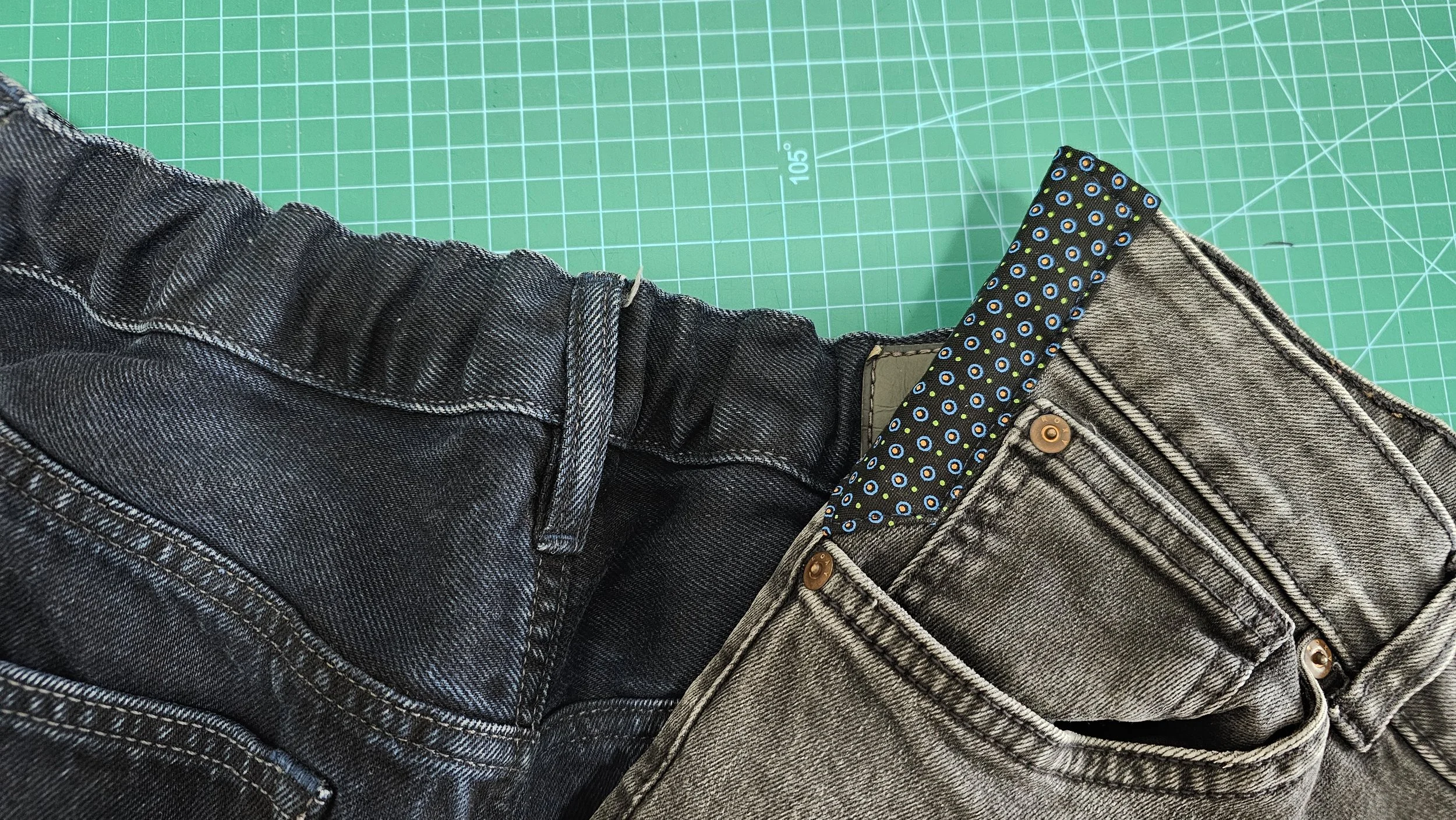
Various way to alter - classic to creative
So where does that leave us?
Perhaps the most interesting thing I've realised through all these conversations is that alterations are about far more than simply changing a garment.
They're about understanding value.
The value of skill.
The value of craftsmanship.
The value of time.
And perhaps most importantly, the value of the garment itself.
In a world where clothing has become increasingly accessible, it can be easy to forget how much work goes into making, repairing, and adapting what we wear. We can scroll, click, and have something new delivered to our door within days, sometimes hours. As consumers, we've become accustomed to convenience, choice, and abundance.
Yet that convenience has also changed our relationship with clothing.
Rather than asking, "Can this be repaired?" or "Can this be altered to fit better?", we're often encouraged to replace it with something new.
We need to start with :
Choosing quality over quantity.
Investing in garments we genuinely enjoy wearing.
Buying less, but buying better.
And when something isn't quite right, considering whether a thoughtful alteration could help it serve us for longer.
Because sometimes the most sustainable garment isn't the newest one in the shop. It's the one already hanging in your wardrobe. But perhaps it does invite us to think differently about the clothes we own, the people who make them, and the skills required to help them fit, function, and last a little longer.
Final thoughts
So, would you do alterations?
Some sewists love them. Some avoid them completely. Most sit somewhere in the middle.
For me, alterations have become less about changing clothing and more about understanding it. They reveal the hidden decisions, techniques, and craftsmanship that exist beneath the finished garment.
Whether you're altering your own clothes, paying someone else to do it, or simply gaining a greater appreciation for the process, there is real value in that work.
Perhaps the next time a garment doesn't fit quite right, the question won't be, "Should I replace it?"
Maybe the better question is:
"Could this simply be altered?"
Lean Stitch (2021) Types of garment production systems. Available at: https://leanstitch.com/types-of-garment-production-systems/ (Accessed: 1 June 2026).RMG Bangladesh (2020) Modular production system (Toyota sewing system/cellular garment manufacturing system). Medium. Available at: https://medium.com/@zahir110199/modular-production-system-toyota-sewing-system-cellular-garment-manufacturing-system-c77a5855635b (Accessed: 1 June 2026).Online Clothing Study (2011) Garment production systems. Available at: https://www.onlineclothingstudy.com/2011/09/garment-production-systems.html (Accessed: 1 June 2026).